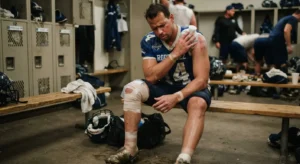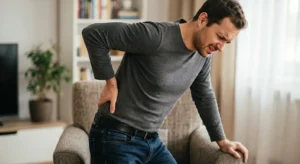
There’s nothing worse than having a low back pain that gradually worsens with every exercise. It could be a deadening, dull ache in the Achilles tendon, a stabbing pain on the outer knee or a deep ache in the shoulder, but the one question that always springs to mind is: Will I have to quit training altogether?
The traditional RICE treatment for minor strains and chronic aches has long been straightforward: rest, ice, compress and elevate. But in today’s sports science and clinical physiotherapy, total rest is no longer a favoured approach. Lack of activity can actually do more damage than good, making your muscles weaker, stiffness in your joints, and lowering your body’s tolerance for tissue.
Smart proactive rehabilitation is the key to overcoming chronic tendonitis, stress reactions and all tissue strains. While staying active, it is possible to heal an overuse injury with some manipulation of training variables.
Recognizing The True Causes Of An Overuse Injury
If you want to overcome a structural issue without putting your workout on hold, you’ll need to know what caused the injury in the first place. An overuse injury results from repetitive stress, not a single traumatic event, such as a fall or a sudden twist. Rather, they’re caused by micro-trauma that builds up over time.
Every exercise, whether it’s lifting weights, running, or cycling, causes tiny tears in your muscles, tendons and ligaments. This is an entirely healthy, normal and essential element of physical conditioning. At rest, the tissue repairs these microscopic tears, strengthening the tissue even more than it was before. This is an important principle referred to as progressive overload.
An overuse injury is an injury that is caused by doing something more than your body can repair. This imbalance is usually due to an excessive amount of training, too high a level of training, not enough recovery or incorrect training technique that overloads one joint more than another. If tissues are over-used without time to recover they will start to deteriorate and lead to chronic inflammation, micro-tearing and ongoing pain.
Why Total Rest Doesn’t Work: According To The Active Recovery Paradigm
With structural pain, it appears that it is best to avoid any activity at all. The key for complete rest is to ease the pain for the time being, but it does not usually address the root cause of the pain. Your pain will reduce for weeks when you’re sitting on the couch waiting for an overuse injury to resolve because you’re not putting as much tension on the damaged tissue. But at the same time, your body understands that it no longer requires you to keep the levels of muscle mass, tendon stiffness, and joint mobility high. Thus, the affected area is weaker, less flexible and less able to bear stress.
When you resume your exercise program, you’re putting the same strain on the weakened tissues that lead to their breakdown. This is a frustrating cycle that brings the pain back right away, and makes you go back to another fruitless period of rest.
An active rehabilitation solution is necessary to correct the problem. Mechanical loading is necessary for proper healing of tissues. Strategic, controlled motions increase circulation in the area, stimulate the process of organized collagen production in damaged tendons, and keep the surrounding muscles at their normal strength. The purpose of active recovery is to exercise at a level that will promote tissue repair, but not induce additional inflammation.
The Traffic Light System Technique
The secret of returning to exercise with an injury is to learn to manage and adapt your training load on a daily basis. You must find a variation of your sport or exercise that does not aggravate the affected area. This can be done safely, using a “Traffic Light System” depending on how much pain there is during and after exercise.
If your discomfort during a modified workout exceeds 3 on a 0 to 10 pain scale, consider stopping the exercise or get help.If the exercise causes discomfort of greater than a 3 on a 0 to 10 pain scale, stop the exercise or seek assistance.
- Green Light (0 to 3 Pain): Low level discomfort or dull awareness of the area is OK as long as it does not affect how you move the area. When you can do the exercise with 100% correct form and your pain is still in the low range, you are loading the tissue safely.
- Yellow Light (4-5 Pain): This is a warning zone. If pain extends into this realm, the exercise is beyond the healing ability of the tissue at this time. You must now decrease the weight, distance or angle of the movement.
- Red Light (6+ Pain or Limping): Any pain or discomfort that requires you to change your biomechanics is a red light. This means that there is currently some damage to the tissue. Discontinue the particular exercise right away.
It is also crucial how your body reacts 24 hours after your workout. If there is a 100% increase in normal morning pain after a training session, this will not be considered acceptable. If you feel stiffer, more swollen, or in more pain the following day than you feel normal, then the previous workout was too much. Use this feedback to decrease training volume or intensity in your next training session.
The Recovering Phase
If you’re recovering from an overuse injury, staying active is important, but it requires some adjustment of your training variables. You don’t have to give up on a workout just because it is painful; just find a different way to do it.
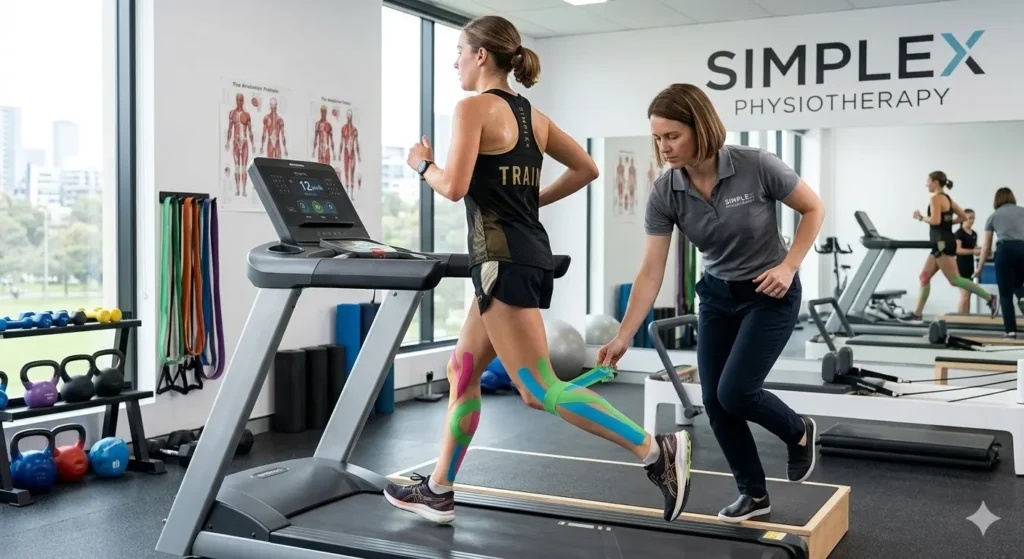
If you are a runner with an overuse injury in your lower limb such as shin splints or patellar tendonitis, you need to decrease the amount of running in the short term. To keep your cardio fit, replace one of the run sessions in your run schedule each week with a low impact activity such as swimming, rowing or cycling. These exercises offer a great aerobic workout without repetitive impact forces put on the lower body joints.
Weightlifting exercises can be adjusted by changing your range of motion, lowering of the weight, and your grip if you are experiencing a shoulder or elbow problem. For example, using dumbbells for a bench press with a neutral grip will make it less structurally threatening on the shoulder joint, but not less active in the chest and triceps. Instead, switch to tempo training (increasing the level of fatigue while performing light loads that are loaded slowly and controlled) to gain strength and cause high muscle fatigue without stressing raw joint structures.
Restoring Tissues Resilience and Movement
Changing one’s current exercise routine is important to not aggravate the injured area, but it’s also essential to correct the physical weakness in one’s body. But overuse injuries rarely are isolated incidents; they typically are a part of a larger biomechanical chain reaction.
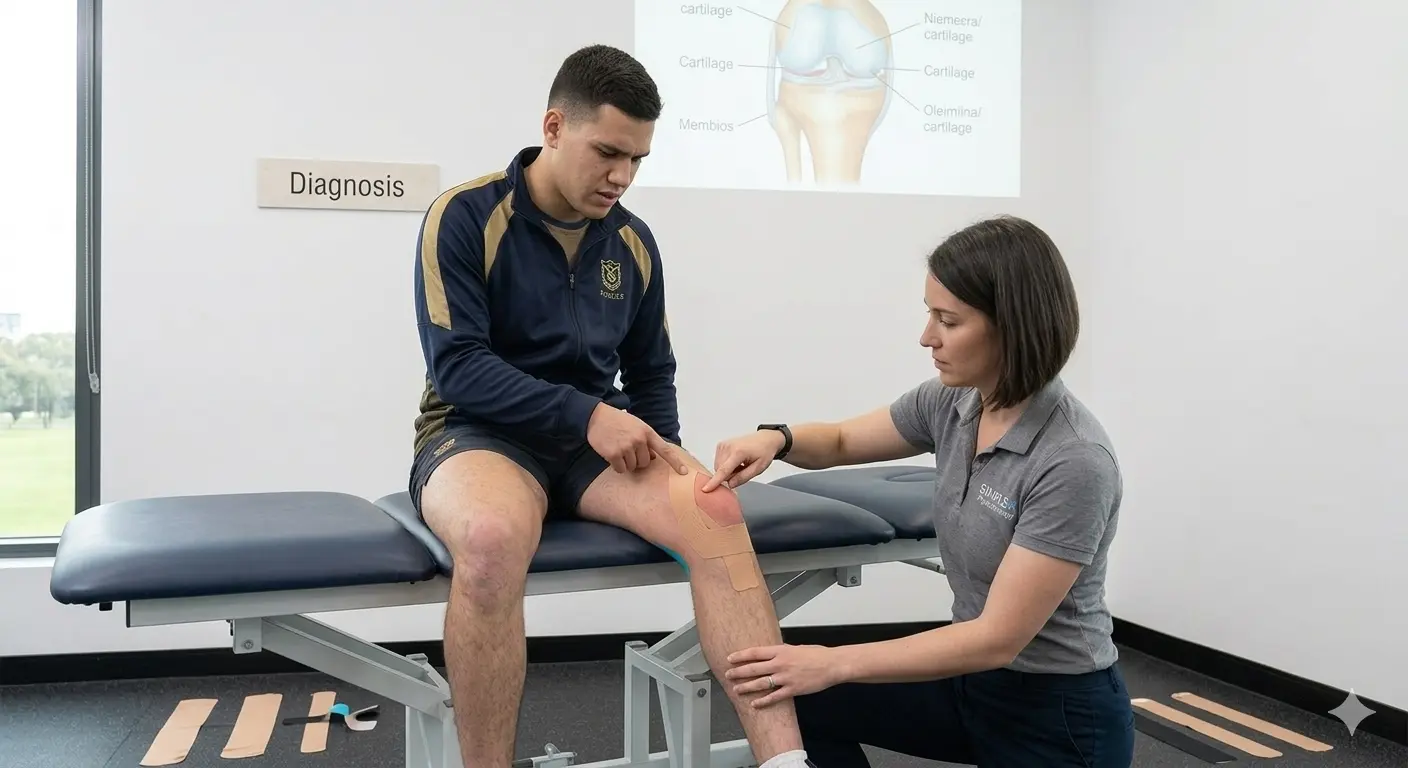
If you have a long-standing knee problem, the problem might lie elsewhere; namely with the hip stabilizers or the ankle mobility, causing the knee to twist inwards when taking a step. Poor thoracic spine mobility or lack of scapular control could be the source of chronic shoulder pain.
Fill in a part of your training week with specific strengthening and mobility exercises to fix the injury. Work on individual muscles surrounding the affected region to develop the capacity of the musculoskeletal system.
- Eccentric exercises (strengthening the eccentric part of the exercise, which is the most important for tendon injuries – the lowering phase of the exercise) and isometric exercises (contraction in the static position) are also very effective for reducing local pain and increasing tendon stiffness.
At the same time, go over your general training routine. Make sure you are getting proper sleep, have a good protein intake to support tissue repair, and are taking time off for recovery. An overuse injury doesn’t have to be the end of the world if it is combined with smart load management, temporary modification of your movements, and targeted structural rehabilitation, you can completely overcome it without having to miss out on all the training you enjoy.
Frequently Asked Questions
1. I’m not sure whether my pain is a normal workout ache or an overuse injury, what is the difference?
The typical muscle soreness following exercise occurs 24-48 hours after activity, is described as a general muscle ache, and gets better with warm up. The typical signs of an overuse injury are a localized, persistent pain in a particular joint or tendon that intensifies with activity and/or is stiff in the morning.
2. May I have pain relievers to help me keep up my regular exercise routine?
No, taking anti-inflammatory drugs or pain relievers as a way to cover up the pain before exercise is extremely risky! When the body’s natural protective mechanism is bypassed, you can overuse damaged tissues by far, and this can be exacerbated to a major chronic structural overuse injury.
3. What is the typical time they take to recover from an overuse injury while still training?
This depends a lot on the level of the load you are putting on the tissue in recovery, so the time frame is dictated by severity of the injury and consistency. With smart modification, mild tendon loading problems can be resolved in 4 to 6 weeks and chronic, long-term tendon problems in 3 to 6 months.