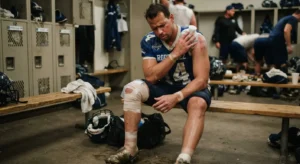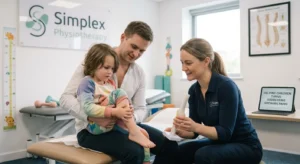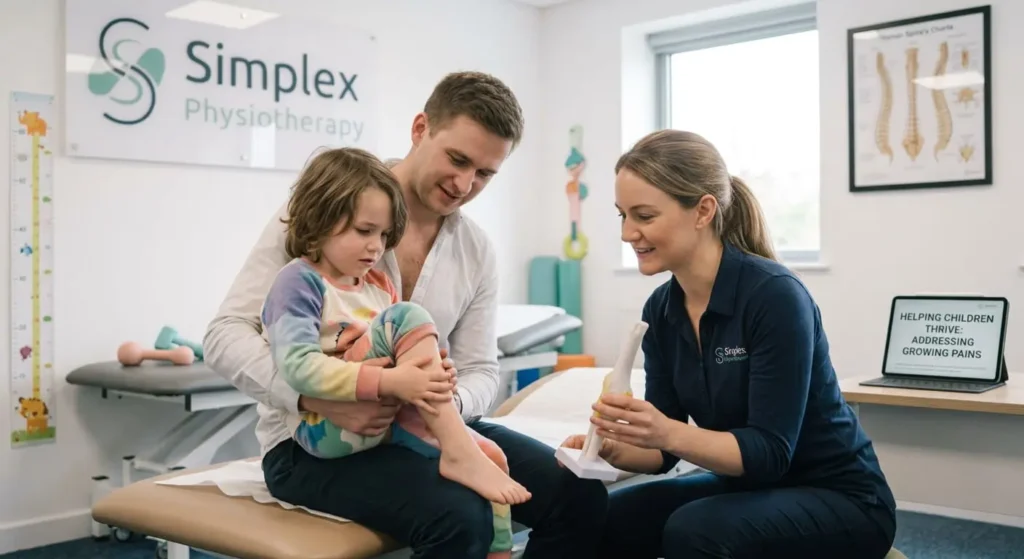
If your child is very active, enjoys weekend sport and/or has been playing hours at the local Melbourne park, you will no doubt be accustomed to hearing about a myriad of aches and bumps that pop up. We as parents are usually so inclined to dismiss them as “growing pains.” Growth spurts do lead to temporary discomfort, but, very much so, active children are susceptible to true musculoskeletal injuries that will need clinical attention. If an actual injury is misdiagnosed as a normal developmental phase, it can lead to future problems that persist into adulthood.
We’ll explain to you how to differentiate between common growing pains and conditions that require a professional assessment, watch for signs, and how physical therapy helps keep your child playing.
The Truth About Growing Pains: What Are They Really?
Although the name implies otherwise, growing pains are not due to the rapid growth of bones. Rather, they are connected with the very high level of physical activity that children experience during their daily routines. They often start as a vague, dull pain in both legs, typically in the calves, shins or behind the knees.
Growing pains are very predictable. They will occur mainly in the late afternoon or evening, sometimes at night when a child is awakened, but they will disappear by morning. Important: Growing pains do not cause lameness, swelling or heat in a joint and they will not prevent a child from running and playing normally the following day. Classic growing pains cause your child to wake up feeling full of energy and ready for soccer action with no complaints.
Signs It’s a Real Musculoskeletal Injury
If your child’s pain remains into the morning or interferes with his or her movement, it’s time to take a closer look. There are some special pediatric problems that occur with children who are active, such as sprains of the ligaments, growth plate inflammation (Osgood-Schlatter disease of the knee, Sever’s disease of the heel), and repetitive strain injuries.
If you’re seeing any of the red flags listed below, you should intervene and get a professional opinion:
- The most apparent indicator is if the pain has been persistent, and clustered in one area, like maybe one knee or ankle, instead of a general ache in both legs. If the pain worsens during or after exercising or your child starts to favour one leg, begins to limp, or alters their running technique to avoid discomfort, watch carefully.
- Other physical signs are also good indicators that it’s not simply in growth. Be aware of any visible swelling, redness or warmth around a joint, and any particular tenderness when lightly pressing down on a bone or tendon.
- Last but not least, when it comes back for more after just a couple of days of use or when it appears to be waking up your kid every night, it indicates a localized inflammation or stress on tissues which requires specific treatment.
The Timing To Take Action: Ignoring The Growth Plate Can Have A Negative Outcome
Children’s bones grow from specific regions on the developing cartilage tissues at the ends of the bones, called growth plates. These plates are not as hard as mature bone, which is the weakest link in a young athlete’s musculoskeletal system.
Tendons that attach close to these growth plates can be stretched too far from the excessive tension of repetitive running, jumping, and quick changes of direction. If a child perseveres causing this pain, they may injure or even break the growth plate. This can cause a delay in normal bone growth, cause long-lasting joint alignment problems or keep them from playing their favorite sport for an entire season. If these mechanical tracking problems are identified early, adjustments to their load, continued safe tracking and avoidance of long term damage are possible.
Physiotherapy plays a vital role in ensuring the safety of young athletes so they can continue to enjoy playing sports.
How SimpleX Physiotherapy Steps In For Your Child
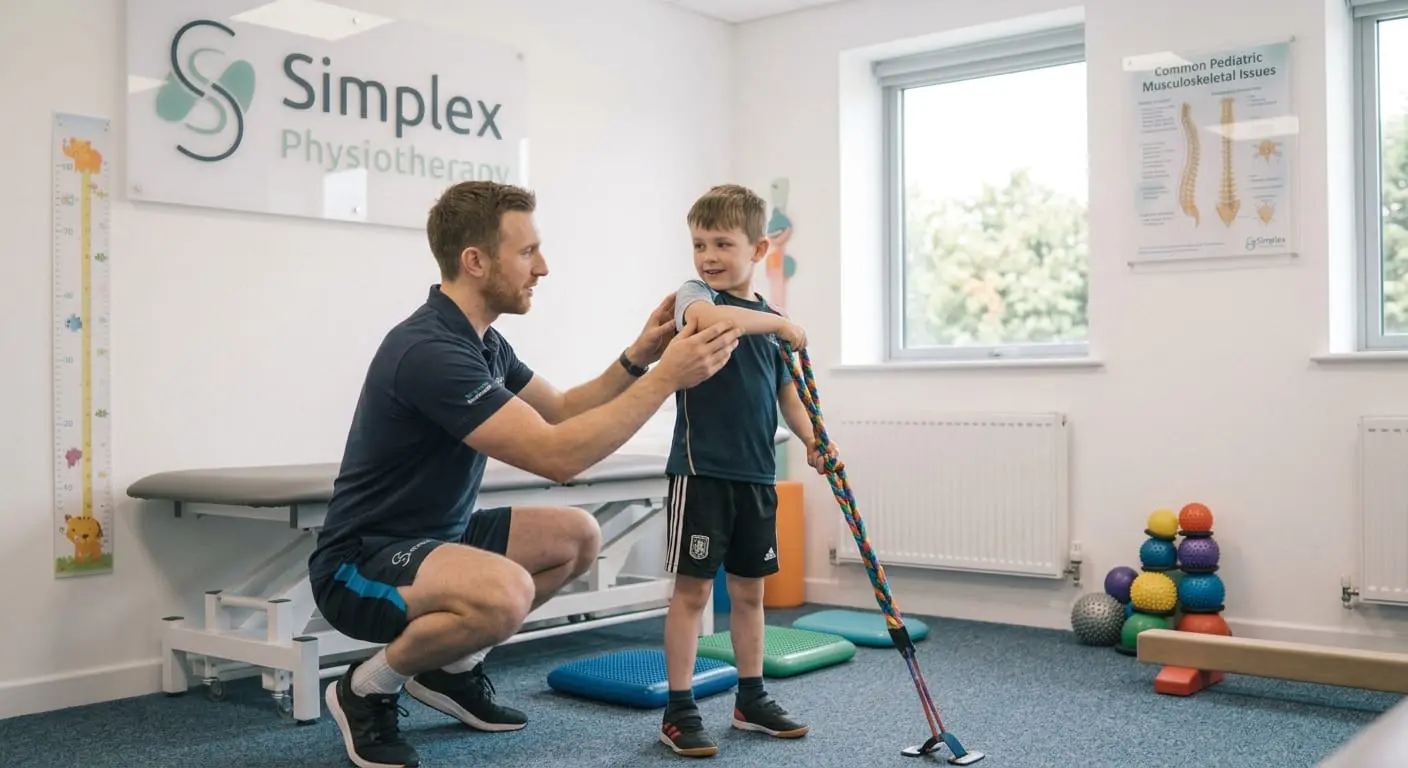
At SimpleX Physiotherapy, we are passionate about assisting active children to remain on the field, court or track. Our focus is on evaluating growing bodies and developing management plans suitable for their age levels to keep the joints healthy and develop athletic resilience:
- Pediatric Biomechanical Screening: Your child’s running mechanics, joint flexibility and muscle tracking is analyzed to find any weaknesses in your child’s structure before they become chronic.
- Growth Plate Management & Load Modification: We assist parents and coaches to make sure your child is training in a way that does not stress their growth plate areas such as heels and knees.
- Hands-on Manual Therapy: gentle soft tissue techniques and targeted stretches are used to reduce acute muscle tightness, which minimises the pull of tendons on growing bones and consequently the pain.
- Strength & Co-ordination Training: We create fun and engaging exercise programs designed for children to help develop core stability, balance and movement patterns that safeguard them from future sports injuries.
The childhood of a grower and their sport should not be an agonizing experience. When you can tell if your child’s muscle fatigue is simply a result of hard work or if he or she has truly strained a muscle, you can provide just the right support at just the right time. If your child is complaining of ongoing pain, or is limping after training sessions, or sitting out during school sport, get it checked out.
Make contact with our pediatric physiotherapy team to chat with one of our clinicians specializing in working with young athletes or to schedule an assessment today on the SimpleX Physiotherapy Contact Page.
Frequently Asked Questions
Q. Is it possible for growing pains to occur in the arm or upper body?
Growing pains are almost always in the lower body, usually in the calves, shins, thighs or behind the knees. Growing pains are very unlikely if your child is complaining of pain in one particular place, such as in their shoulder, elbow or wrist, after swimming, cricket or gymnastics. Active kids, upper body pain is almost always a mechanical loading problem, repetitive strain or a growth plate tracking problem such as “Little League elbow.
Q. Should I give my child painkillers for pain in the desk or sports?
If a child’s pain is not due to any of the usual growing pains, then the pain relief should be used to treat the pain rather than to make the child feel better and able to continue playing the competitive sport. If a child requires medication in order to participate in a game or training session, he or she is probably suffering from an active structural injury or growth plate inflammation. Masking that pain prevents the body from responding with its natural protective mechanisms, and allows it to seriously over load the tissue, and exacerbate the tissue damage.
Q. What tests does a physiotherapist use to diagnose growth plate problems such as Sever’s or Osgood-Schlatter?
A thorough non-invasive physical examination by a physiotherapist is used to diagnose these problems, instead of immediately proceeding to uncomfortable X-rays. Palpation testing is used where necessary (such as the heel squeeze test for Sever), joint range of motion is assessed and functional movement patterns are assessed (such as squatting, hopping and jumping). A safe treatment plan can be plotted instantaneously and growth plate irritation identified by watching muscle activation and muscle tendon tension.