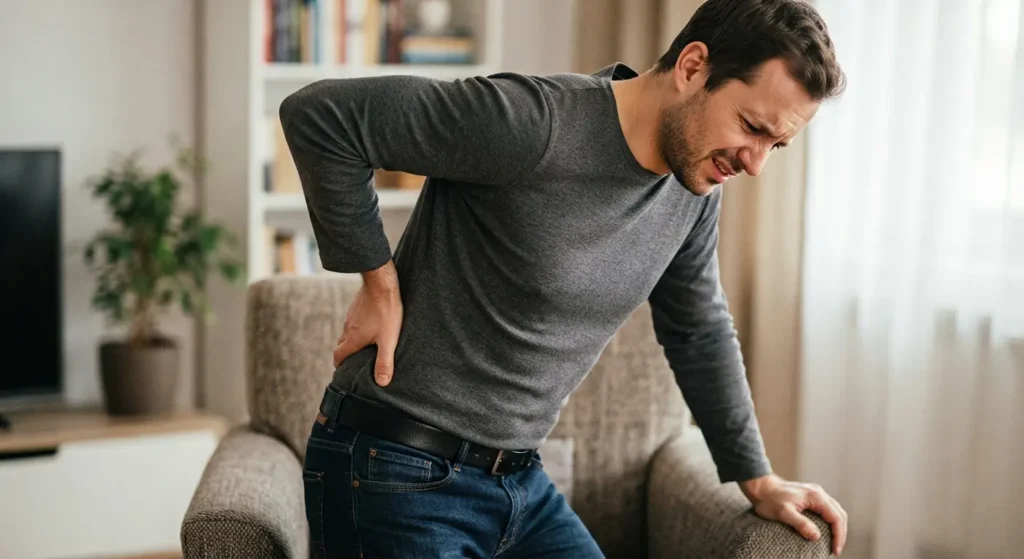
Lower back pain is still one of the top causes of missed work and loss of enjoyment of favourite activities in adults. Many people think that the key to getting their back pain to stop once it occurs is to work out the abdominal muscles by doing crunches or sit-ups. At Simplex Physiotherapy, our focus is to educate patients that treating chronic lumbar discomfort requires a much more detailed understanding of true functional core stability.
The core is not just a wall of superficial muscles which work on flexion. Rather, it works as a cohesive muscular cylinder to stabilise your spine, pelvis and kinetic chain during the normal functioning of your body. If your deep stabilising system doesn’t work properly, mechanical forces are placed onto the lower back, resulting in joint irritation, disc strain and ongoing muscle spasms.
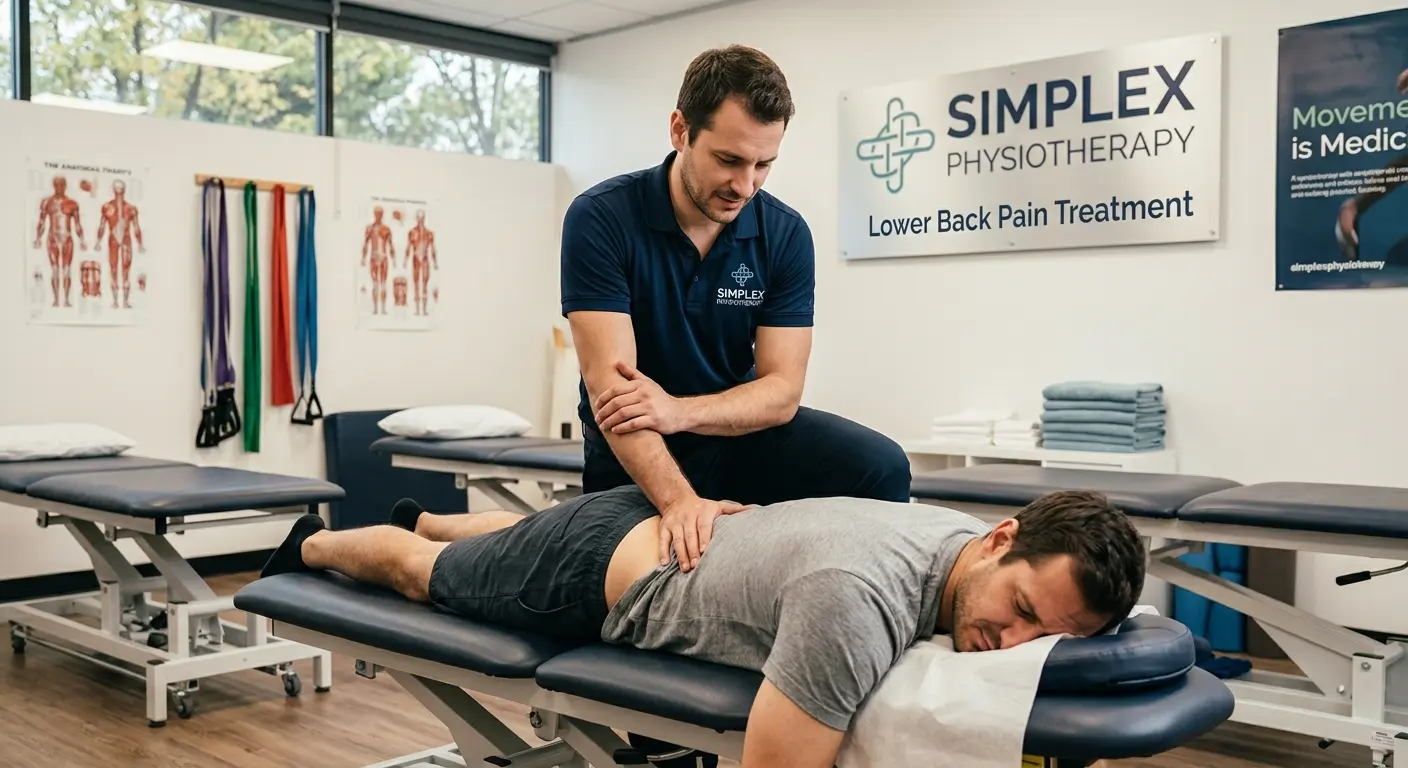
Deep Core Cylinder: Intra-Abdominal Control
If you can imagine your core as a cylinder under pressure, you’ll gain a better understanding of how to keep your lower back protected. The top of the cylinder is your diaphragm, the bottom of the cylinder is your pelvic floor, the back of the cylinder is formed by the multifidus muscles along the length of your spine, and the front and sides of the cylinder are covered by the transversus abdominis. These muscles need to be activated together when you lift, move and twist to provide a stable base of support for your lumbar spine.
Traditional abdominal exercises are often ineffective in treating lower back pain as they only work the superficial “six-pack” muscle, the rectus abdominis. If you work the same muscle group over and over without activating the deeper stabilisers, you will be applying more compression to the discs of your spine. True stability depends on the accurate control and coordination of your deep muscles, so that they fire fractions of a second before your arm or leg moves.
Evidence-Based Physiotherapy Approaches for the Treatment of the Lumbar Spine
When it comes to overcoming recurrent lower back pain, you need to get away from general exercises and concentrate on exact movement modification. Patients undergo a carefully designed sequence of treatment in order to restore long-term spinal health:
- Motor Control Re-Education: We teach you how to isolate and gently contract the transversus abdominis and pelvic floor muscles without bracing, holding your breath or tilting your pelvis too much.
- Functional Movement Integration: Once you have achieved reliable firing of the deep stabilising system, we incorporate it into basic movements such as squats, lunges, lifting and other functional movements, so that your spine remains protected during everyday tasks.
- Progressive Load Management: We safely introduce targeted resistance training to improve the endurance of the deep muscles of the lower back, ensuring your spine is able to meet the physical challenges of your occupation and lifestyle.
The Neurological Component: Re-establishing the Pathways Between the Brain & Muscles
When lower back pain becomes a recurring or chronic problem, it is not only to do with weakness in the muscles. Rather, it often arises because of a disruption in the communication between the brain and the musculoskeletal system. When the lower back is injured or inflamed, the deep stabilising muscles (transversus abdominis, multifidus etc.) are actively inhibited by the nervous system as a protective mechanism.
Over time, this automatic inhibition causes the deep stabilisers to “forget” to fire automatically, and the neurological pathway stays switched off even after the initial tissue injury has healed. This means the deeper stabilising muscles don’t tighten up before you bend, which causes the larger superficial muscles to react first to protect the spine and can result in a spasm.
Physiotherapy plays a very important role in unlocking these pathways, using specific biofeedback techniques to retrain the nervous system to activate the deep core muscles prior to movement.
The Role of the Diaphragm: Breathing Mechanics & Spinal Pressure
It’s a surprise to many patients that breathing directly affects the health of their lower back. The diaphragm doesn’t just power breathing, it also forms the roof of your core stabilising cylinder. In an ideal, balanced musculoskeletal system, breathing and core stability work in harmony. When the diaphragm contracts and moves down on inhalation, it naturally increases intra-abdominal pressure, which structurally supports the lumbar spine from within.
But when stress becomes chronic, desk posture is poor and lower back pain continues, people tend to fall into shallow “chest breathing”. With primary chest breathing, the diaphragm stays elevated and the core loses its internal pressure system. This makes the lower back more susceptible to excessive shearing forces during basic movements.
A very important step in re-establishing long-term spinal stability is restoring proper diaphragmatic breathing, which means the abdomen and lower ribs should expand fully during inhalation.
Relieving the Compressive Burden: Hip & Thoracic Mobility
The lumbar spine is built for stability, with little ability to rotate. It sits right between two zones that are well suited to a high degree of mobility: the hips and the thoracic spine (upper back). If lifestyle habits or old injuries cause the hips to become stiff or the upper back to round, the lower back is left to compensate.
During a squat or a twist, if the hips are not able to move freely, the lumbar spine is forced out of its safe, neutral position to complete the movement. This repetitive compensation can place tremendous mechanical stress on the facet joints and lumbar discs. A comprehensive core stability program needs to address these surrounding joint restrictions. Once the hips and thoracic spine start moving optimally, the excessive compressive force on the lower back is removed.
Progression Framework: From Static Activation to Dynamic Real-World Strength
True core stability is rebuilt in a systematic, step-wise fashion. One of the main reasons gym enthusiasts aggravate their lower back pain is attempting advanced workouts before they have mastered correct muscle isolation. A successful clinical rehabilitation program follows a well-defined sequence:
- Phase One – Static Isolation: The first step is to lie in a neutral position and engage the deep transversus abdominis and pelvic floor muscles without shifting the pelvis, moving the spine or holding your breath.
- Phase Two – Controlled Limb Loading: Once you’ve learned to isolate these muscles, you add basic arm or leg movements while keeping your trunk completely stable and still. The “dead bug” or “bird dog” are good examples of this.
- Phase Three – Dynamic Functional Strength: The final step combines core activation with more complex, upright movements that relate to your lifestyle and pastimes. This includes a progressive, supervised series of deadlifts, squats, lunges and rotational carries to ensure the spine is well protected, whether you’re lifting heavy grocery bags or swinging a golf club.
Frequently Asked Questions
Q. Why is it that abdominal crunches can aggravate lower back pain?
Traditional crunches isolate only the superficial “six-pack” muscle (rectus abdominis). If you work this muscle for too long without activating your deep stabilisers, your spine won’t be protected and you will be doing more harm than good by increasing the compression on your lumbar discs.
Q. What effect does shallow breathing have on the lower back?
The diaphragm is the structural ceiling of your core cylinder. Shallow chest breathing doesn’t allow the diaphragm to move down, resulting in a loss of the natural internal abdominal pressure needed to support and protect the lumbar spine from normal shearing forces.
Q. How are stiff hips connected with chronic lower back pain?
The hips are built for mobility and the lumbar spine for stability. After sitting for long periods, your hips may become locked, which forces your lower back to rotate and bend out of its safe position, irritating the joints and causing muscle spasm.